

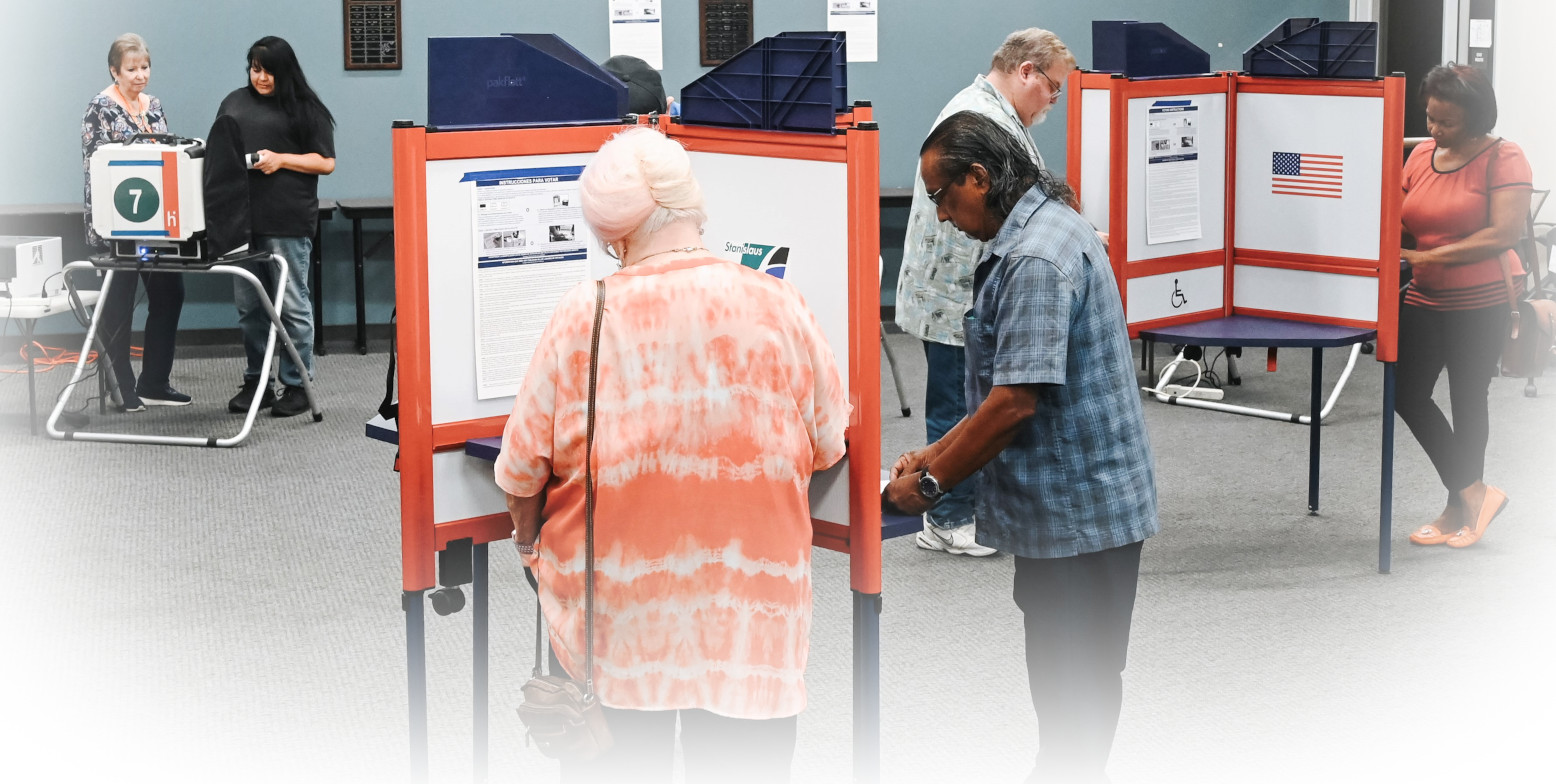


Canvass of the Vote
The election canvass process is an internal audit and is required by state law to ensure the accuracy of election results. California election law allows 30 days for the conduct of the official canvass. All aspects of the canvass are open to public observation. During the canvass, vote by mail and provisionally cast ballots not counted on Election Night are researched to validate eligibility. Valid vote by mail ballots continue to arrive for seven days after Election Day. The canvass concludes with the certification and issuance of official election results. Listed below are the major components of the official canvass.
1% Manual Vote Tally
All voted ballots from a randomly selected 1 percent of precinct batches are manually tallied and balanced against the computer counts to verify the accuracy of the election tally system. This process is required by law. The random drawing of precinct batches is open to the public. It is conducted two days after the election.
Ballots Added During Official Canvass
The following ballots are withheld from the tally system on Election Night. Once eligibility is determined, these ballots are added to the election results. Election results are periodically updated until the results are certified.
Withheld ballot types include:
- Vote by mail ballots returned on Election Day to the Elections Office and dropped off at vote centers and authorized ballot drop boxes. These ballots do not arrive in sufficient time to be signature-verified, sorted, opened and prepared for tabulation on Election Night.
- Damaged ballots that are unable to be processed through the election tally system. They must be manually duplicated by a team of election staff prior to tabulation.
- Provisionally cast ballots issued at voting locations on Election Day must be researched to determine eligibility, which is a time-consuming process. Provisional ballots are issued at vote centers and the Elections Office when a person's voter registration cannot immediately be verified.
After voting, all provisional ballots are placed in special pink and white envelopes to keep them separate from regular voted ballots. Conditional voter registration (CVR) ballots go in special yellow and white envelopes. CVR ballots are one type of provisional ballot issued to people who registered in the 14 days preceding an election and on Election Day. During the canvass period after Election Night, each provisional and CVR ballot is researched to determine eligibility of the voter. Since there may be thousands, it takes time to carefully check each one using the computer registration files. If the voter is qualified to vote, the ballot is added to the overall total for the election. To learn the status of your provisionally cast ballot, click here or call 209-525-5201 at least 40 days after the election. - Write-in ballots must be individually reviewed to determine if the write-in vote is for a qualified or unqualified write-in candidate and whether the voter also voted for a candidate listed on the ballot for the same office (i.e., over-voted the ballot.)
Disclaimer: The information contained in these pages was valid at the time of publication. The County Clerk / Recorder / Registrar of Voters reserves the right to modify, update, change or make improvements at any time, without notice, and assumes no liability for damages incurred directly or indirectly as a result of errors, omissions or discrepancies.